Monday, December 22, 2008

No tobacco in your joint please!

Weed, grass, pot, reefer, ganja, hash, shit, Mary Jane, whatever you might wanna call it, but Holland has long been known as a country tolerating the herb's existance in Duth social life. Coffeeshops are just part of the Dutch cultural fibre as nasi goreng stalls are for us.

Yet as from July 1st 2008, coinciding with the tobacco ban in Dutch cafes, bars, clubs and restaurants, punters in coffeeshops will have to either smoke pure weed (Dutch grass is usually mixed with tobacco) or as is the case in some coffeeshops, smoke in a limited smoking area.

Here are a few bad quality mobile phone picks of the post-smoking ban Christmas atmosphere at Rotterdam's Reefer Coffeeshop:


Thursday, December 4, 2008

GZA - Paard van Troje, The Hague. 20 November 2008


At last, a rap concert like it says on the tin. Members of the crowd putting up Wu signs upon request, the gig starting late, a blind drunk MC picking up femmes to join him on stage, a member of the audience fainting and needing medical help, terrible opening acts, it was all there (except for the stereotypical guns and bling)! Yes this was the Wu Tang Clan sponsored GZA concert at The Hague’s Paard van Troje (The Trojan Horse) a few weeks ago and it was indeed everything I expected it to be.

Were you one of those cats who were spellbound by Wu Tang Clan’s Enter the 36 Chambers when it dropped in ’93? I was 10 back then so it took your narrator here a full decade to catch up with the rest of the world in being puzzled, intrigued and addicted to the 12 tracks that made up the seminal hardcore rap album. Actually I’ve even asked myself the question why I fell all over this album which was not only not danceable and extremely gritty in production but also crammed with misogyny, talk of chopping people’s heads off and all that jazz. Then it all dawned on me: it was precisely because people couldn’t dance to it, it was because the production was gritty, creepy as well as minimalist and the lyrics so far out that I loved the rawness and directness of it all. The rap game changed from either jazz layered alternative hip-hop acts like De La Soul & Black Sheep or the LA G-Funk of Dr Dre and Snoop to this modern (at the time) New York hip-hop.

Although many argue that The Wu haven’t produced anything remotely close to the dizzying heights of their debut album ever since, 1995’s Liquid Swords by Wu celebrated rapper GZA is often hailed as one of the best RZA produced Wu Tang solo efforts. Unlike many other Wu Tang albums where the storyboard is usually dominated by cocaine deals and dark humour (something I feel Wu Tang are extremely underappreciated for), Liquid Swords is cold, precise, scary and damn right disturbing. The kung-fu samples taken are from one of the creepiest: Shogun Assassin (1980), and it compliments the RZA production and lyrics perfectly. Throw in a few complex metaphors on hatred of record labels, chess battles, Staten Island and The Nation of Islam, and you have a masterpiece of New-York rap.

Liquid Swords was 13 long years ago and The Wu Tang Clan have released 4 more studio albums since, including 8 Diagrams released late last year to mixed reviews. Cutting the album has apparently left The Wu in a bit of a strut with rappers Ghostace Killah and Shallah Raekwon branding RZA a ‘hip-hop hippie’ over his alternate guitar heavy production of 8 Diagrams and rumours of the group never performing this new album over a live audience. 2008 saw The Wu tour Europe and the US with little or no material from their latest album to show for. They were scheduled to tour Holland when I saw that GZA, Wu Tang’s most senior member was to perform his 1995 classic only a few months after The Wu play. Add the fact that it was to be held in The Hague and not Amsterdam (meaning no middle of the night, nightmarish train-rides back home), my mind was made up.

The gig started an hour late, leaving the audience entertained to a Wu Tang affiliated Dutch rap group Sluwe Vosz and OjaweL, whose only distinction for being Dutch was the language used in their rhymes; the production and rhyming flow were no different to a mediocre rap duo from Harlem or Boston or anywhere else in the US of A. The less said about the Dutch duo the better, but despite lacking originality the two MCs did their best to fill the venue and rile the hip-hop heads in the crowd for the arrival of The Genius and his merry Wu Tang crowd. Whether they played a Dutch version of Wu Tang sounding tracks to get the crowd in the mood and not due to their minimal creativity remains to be seen.


Dressed in a simplistic hooded top, jeans and beanie hat, GZA took the stage with the now-familiar 1970s kung-fu loop “When I was little, my father was famous, he was the greatest Samurai in the empire…”, Liquid Swords’ opening sample, booming in the background (provided by DJ Sueside). He looked every bit as convincing. It may have been 13 years since he dropped the seminal Liquid Swords LP yet his delivery and timing this time around definitely does justice of GZA’s title as Wu Tang’s best lyricist. Liquid Swords was recited from back to front with clinical precision with other Wu Tang member Killah Priest joining The Genius after a couple of tracks from the album. After about an hour, all 13 tracks from the 1995 classic were covered and just when the crowd were fidgeting and getting restless thinking that the gig was about to end, GZA and Killah Priest laid out their standard Wu Tang tracks from either Wu’s 5 other studio albums and a few from GZA’s solo efforts.

The trio went on for another 30-35 minutes which involved the abovementioned girl grabbing, audience fainting, drunken rapper (referring to Killah Priest’s alcohol consumption) antics which was entertaining to say the least. Performance wise it could be underwhelming for the underground hip-hop heads who expect improvisation to live sets but if it’s Liquid Swords that you wanted, you definitely got your money’s worth!


Sunday, November 23, 2008

MC Phoenix


Picked up the newspaper in the train the other day to find out that Joaquin Phoenix has decided to call it quits on his acting career to concentrate on music. Just when I was dreading another singer songwriter with a toothache (must have been his Johnny Cash portrayal that gave me this idea), Stones Throw revealed Phoenix debuting his rapping career with Stones Throw nu-funk DJ Dam-Funk in Los Angeles’ Funkmosphere. More pictures to be found here.


Voodoo Funk mixes

Old records are intriguing. Old records from Africa collected by avid vinyl junkie/travelling DJ responsible for Voodoo Funk are just über-cool. Check out his mix dubbed ‘Everybody get down’ here.

2001: Madlib v Cut Chemist

The good guys from Pitchfork always make life easier when trying to dig out cool videos. This gem is the 2001 live gig of Los Angeles' finest hip-hop disc jockeys Madlib & Cut Chemist (Jurassic 5's record spinner) at LA's Root Down available for your videwing pleasure until Friday 28 Nov 2008. Get all the episodes here

Thursday, November 13, 2008

So long Mitch, and thanks for all the drumming! Mitch Mitchell: 1947-2008


Say what you will about The Jimi Hendrix Experience, whether they could have been steadier, could have improved musically, could have lasted for longer than 3 years and all that, yet a massive difference in pop-culture and pop-music they did make. From 1966-1969 the pop charts were invaded by 3 young dudes with afros who played their instruments like lead instruments. Jimi had the mad playing skillz and perfected the guitar burning act whilst Noel Redding was the silent bass guitarist who left the group in ’69. Yet Essex born Mitch Mitchell laid the bare beats for the trio and played a huge role in creating the ‘Jimi Hendrix Experience’ sound (that The Band of Gypsies sound nothing like The Experience is partly down to his absence).

Mitchell’s jazz background as a session musician brought him to play with The Coronets, Johnny Harris and the Shades, The Pretty Things, Georgie Fame and The Riot Squad to name but a few before joining the Experience after meeting his guitar smashing partner in ‘66. The 3 years that followed saw Mitch lauded with the tiresome ‘one of the best drummers in the world’ tag but that claim wasn't without merit as The Experience were regular inhabitants of the top 40 charts as well as being on the receiving end of glowing reviews from the critics as Are You Experienced, Axis: Bold as Love and Electric Ladyland sold like hot nasi goreng.

Mitchell’s departure after his stint with Jimi’s Woodstock 69 live band Gypsy Sun and Rainbows saw him part of the underrated 70s rock group Ramatam as well as a sought after session drummer up till his untimely death in Portland on Wednesday 12 November 2008 just 5 days after completing the 2008 Experience Hendrix tour across the US.


After Noel Redding’s death in 2003 and Jimi Hendrix’s in 1970, the departure of Mitchell leaves us with no surviving members of the seminal Jimi Hendrix Experience. A sad day indeed.

Wednesday, November 12, 2008

Afrika!

I’ve been getting more and more intrigued with African popular music for quite sometime now. While getting attracted to music from the grandmother continent of popular music is relatively easy to do, it started off quite tricky as African music tended to be labeled under the ever-patronizing name World Music. While the term gives an initial impression of an orgy-of-sounds and genre mixing from different corners of this earth, my initial naive illusion soon gave way to the perception that it is just an easy way of labeling all non Anglo-Saxon music under an easy no-brainer name. This isn’t helped by the fact that most pop albums that had the terms ‘World Music’ suspiciously attached to it, from pop-folk albums like Paul Simon’s Graceland, latter albums of the Talking Heads, the immense jazz of Weather Report, to modern indie-pop outfit Vampire Weekend, sounds and rhythms from the African continent were evident by the bucket loads.


My recent escapade into proper African Music (you know, music by actual African musicians) started with an introduction to the Afrobeat of Fela Kuti & Africa 70 a couple of years ago. Nigeria’s answer to James Brown is arguably the perfect embodiment of the fusion between African beats and the American R&B sounds of the 60s and 70s. His politically infused, Pidgin English speaking, over-10-minute-long tracks take James Brown’s rock steady funk drives and combining them with African chants, congas, bongos and drums (led by Tony Allen, recently recruited as drummer for Damon Albarn’s The Good, The Bad & The Queen) were a fresh wake up call on how insanely cool African music can be. The release of 1960s and 70s African highlife, juju and Afrobeat tunes through Nigeria 70-Lagos Jump complied by UK Based Strut Records and the ever increasing popularity of New York based African music blogs Awesome Tapes from Africa and Voodoo Funk only served to strengthen this fascination with (specifically) West-African music.


Fela Live

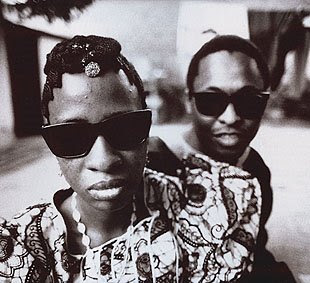
The whole shenanigans surrounding Live 8 2005 and Bob Geldof’s non-usage of African artists due to his notion that they’re not quite good enough to attract world wide attention made me even more curious about modern acts from the sub-Saharan Africa. This led me to be lucky enough to uncover the gem that is Amadou et Mariam’s Dimanche à Bamako. Amadou and Mariam are a blind Malian couple (together since both attended school for the blind over 30 years ago) who have been producing steady rock infused West-African music since the late 90s through a plethora of Bamako and Paris based record labels. Yet their breakthrough came in 2005 when Dimanche à Bamako was released on NoneSuch Records to raving reviews from the world wide music press. The fact that the album was produced by the French- Basque Latin God, Manu Chao (who also naturally falls under the umbrella of ‘World Music’) helped add to the crisp production and popularity of the album immensely. In true Manu Chao style he made the fusion of African rhythm with heavy blues undertones and Latin-European style production seem effortless.

Having completed a lengthy 3 year tour around the US and Europe which had them play Chicago’s Lollapalooza and the African Express festival in London to name just two, this Malian duo are to release their 8th studio album to date, Welcome to Mali on November 17th. The fact that this album will be produced by Blur/Gorillaz/The Good, The Bad & The Queen front man Damon Albarn will add to the commercial & critical appeal of this sought after record. Also, anticipating just how Albarn plans to further enhance the sound of these two artists is almost half the excitement.

Amadou et Mariam on the BBC Jools Holland Show

Amadou et Mariam are indeed leading the way to popularising African pop music to the world yet anticipate more change and improvements in public perception in a time where African influenced changes are en vogue (I’m looking at you Obama).